
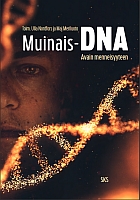
Muinais-DNA
Avain menneisyyteen
 Download
Contributor(s)
Nordfors, Ulla (editor)
Meriluoto, Maj (editor)
Language
FinnishAbstract
Ancient DNA (aDNA) research has become one of the most influential developments in archaeological science. It allows researchers to recover and analyze genetic material from long-deceased humans, animals, plants, and pathogens. The research results have been widely published in high-impact journals and frequently featured in the media, giving aDNA visibility that has led some to describe archaeogenetics as a “celebrity science”. This volume introduces the field of archaeogenetics through a Finnish lens, and combines research results from the Sugrige/Sumragen ancient genome project and the Vapriikki Museum Centre’s research and exhibition initiative at the ruined St. Michael’s church in Pälkäne and Vilusenharju cemetery in Tampere. The book brings ancient and historically more recent individuals close to a modern reader by presenting several case studies, through which archaeogenetics is framed as a genuinely interdisciplinary field drawing on archaeology, molecular biology, bioinformatics, history, and linguistics. The publication starts by examining the potential and limitations of aDNA analysis and highlights the methodological challenges such as DNA degradation, contamination risks, and the unpredictable nature of preservation. Sampling strategies and laboratory protocols are discussed in detail, as is the complexity of the interpretation of DNA data. The book also critically examines the broader societal implications of genetic research, including the increasing popularity of commercial ancestry tests and genetic genealogy. These contexts involve a risk of oversimplifying complex genealogical and population histories. Ethical issues are addressed throughout the volume, particularly the treatment of human remains and the responsibilities of researchers, and the findings are placed in a broader historical and archaeological interpretative framework. For example, the chapters discuss how linguistic, archaeological, and genetic histories may follow distinct and sometimes divergent paths. The chapters explore the genetic legacy of archaic humans, such as Neanderthals and Denisovans, the genetic dimensions of Finland’s settlement history, kinship structures, health conditions and personal characteristics of individuals. The latter include analyses of sex, eye and hair colour, and disease susceptibility, which are always approached with caution and respect towards the examined individual. In addition to human-centered studies, the volume highlights applications of aDNA in environmental and ecological research. Chapters on metagenomics, ancient plants, and the genetic histories of animals explore how molecular data can illuminate long-term ecological change, domestication processes, and human-environment interactions. Proteomic analysis is presented as a valuable complementary method, particularly in cases where DNA is poorly preserved, contributing further insights into past diets, health, and species identification. The final chapter on the prehistoric languages spoken in the area of modern Finland complements the volume by offering a linguistic perspective that enriches the genetic and archaeological narratives. The book shows how interdisciplinary archaeogenetic research can shed light on various aspects of human history, and contributes to a critically informed and ethically responsible approach to molecular archaeology by expanding scientific understanding while recognizing the importance of contextualization in the study of the lives and legacies of past populations.
Keywords
ancient DNA; archaeogenetics; archaeology; genetics; genome; pre-historyDOI
10.21435/tl.298ISBN
9789518589610, 9789518589634, 9789518589627Publisher
Finnish Literature Society / SKSPublication date and place
Helsinki, 2025Imprint
Finnish Literature Society / SKSSeries
Tietolipas, 29Classification
Archaeology
Evolutionary anthropology / Human evolution
Genetics (non-medical)
History