
Logo Oapen
  • Join
    • Deposit
    • For Librarians
    • For Publishers
    • For Researchers
    • Funders
    • Resources
    • OAPEN
        View Item 
        •   OAPEN Home
        • View Item
        •   OAPEN Home
        • View Item
        JavaScript is disabled for your browser. Some features of this site may not work without it.

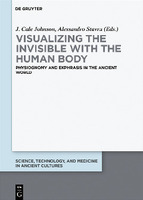
        Visualizing the invisible with the human body
        Thumbnail
        Download PDF Viewer
        Web Shop
        Contributor(s)
        Cale Johnson, J. (editor)
        Stavru, Alessandro (editor)
        Language
        English
        Show full item record
        Abstract
        Physiognomy and ekphrasis are two of the most important modes of description in antiquity and represent the necessary precursors of scientific description. The primary way of divining the characteristics and fate of an individual, whether inborn or acquired, was to observe the patient’s external characteristics and behaviour. This volume focuses initially on two types of descriptive literature in Mesopotamia: physiognomic omens and what we might call ekphrastic description. These modalities are traced through ancient India, Ugaritic and the Hebrew Bible, before arriving at the physiognomic features of famous historical figures such as Themistocles, Socrates or Augustus in the Graeco-Roman world, where physiognomic discussions become intertwined with typological analyses of human characters. The Arabic compendial culture absorbed and remade these different physiognomic and ekphrastic traditions, incorporating both Mesopotamian links between physiognomy and medicine and the interest in characterological ‘types’ that had emerged in the Hellenistic period.This volume offer the first wide-ranging picture of these modalities of description in antiquity.
        URI
        http://library.oapen.org/handle/20.500.12657/23215
        Keywords
        Physiognomy Description Ekphrasis
        DOI
        10.1515/9783110642698
        ISBN
        9783110642681;9783110618266
        Publisher
        De Gruyter
        Publisher website
        https://www.degruyter.com/
        Publication date and place
        Berlin/Boston, 2020
        Series
        Science, Technology, and Medicine in Ancient Cultures, 10
        Classification
        Literary studies: ancient, classical and medieval
        History of science
        Pages
        501
        Rights
        http://creativecommons.org/licenses/by-nc-nd/4.0
        • Imported or submitted locally

        Browse

        All of OAPENSubjectsPublishersLanguagesCollections

        My Account

        LoginRegister

        Export

        Repository metadata
        Logo Oapen
        • For Librarians
        • For Publishers
        • For Researchers
        • Funders
        • Resources
        • OAPEN

        Newsletter

        • Subscribe to our newsletter
        • view our news archive

        Follow us on

        License

        • If not noted otherwise all contents are available under Attribution 4.0 International (CC BY 4.0)

        Credits

        • logo EU
        • This project received funding from the European Union's Horizon 2020 research and innovation programme under grant agreement No 683680, 810640, 871069 and 964352.

        OAPEN is based in the Netherlands, with its registered office in the National Library in The Hague.

        Director: Niels Stern

        Address:
        OAPEN Foundation
        Prins Willem-Alexanderhof 5
        2595 BE The Hague
        Postal address:
        OAPEN Foundation
        P.O. Box 90407
        2509 LK The Hague

        Websites:
        OAPEN Home: www.oapen.org
        OAPEN Library: library.oapen.org
        DOAB: www.doabooks.org


        Export search results

        The export option will allow you to export the current search results of the entered query to a file. Differen formats are available for download. To export the items, click on the button corresponding with the preferred download format.

        A logged-in user can export up to 15000 items. If you're not logged in, you can export no more than 500 items.

        To select a subset of the search results, click "Selective Export" button and make a selection of the items you want to export. The amount of items that can be exported at once is similarly restricted as the full export.

        After making a selection, click one of the export format buttons. The amount of items that will be exported is indicated in the bubble next to export format.