
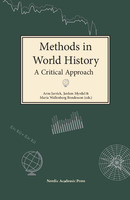
Methods in World History: A Critical Approach
Kriterium
 Download
 Web Shop
Contributor(s)
Jarrick, Arne (editor)
Language
EnglishAbstract
"Interest in world history has never been greater—both among historians and the reading public. Globalization has coaxed historians out of their fixation on all things national, which has characterized historical research since the nineteenth century. But with this new global field of research has come new methodological problems. It is high time that these problems were tackled, if only to develop methods to ensure that world-historical research strives for the same high quality and standards as any other field of historical study. This book addresses all these problems in detail, with a particular emphasis on solutions. The contributors discuss how the progress made in the sciences, which offer unique access to new types of source material, can best be used by the historians of global processes. These are sources that demand an awareness of both their advantages and their drawbacks. The same is true of the secondary sources, which are the basis of most world-historical overviews and syntheses. Primary and secondary sources alike require shrewd handling in a way not seen before. Similarly, the calculations and comparisons essential to world history must be harmonized, and historians have to acknowledge that the information they are working from is often of variable quality and detail. Linguistic and cultural differences must also be analysed systematically whenever historians seek the recurring traits in human history, much as they must be alert to the strong ideological interests that all too often distort scholarly results.
Solutions to these and the other methodological problems are hammered out in this book. Whether researchers, students, or interested readers, anyone keen to sharpen their critical thinking about world history will find there is much to take away from this book. Intresset för världshistoria är större än på länge – både bland den läsande allmänheten och bland historiker. Globaliseringen har bidragit till att historikerna kommit ut ur den fixering vid det nationella som kännetecknat deras forskning ända sedan 1800-‐talet. Men med den nya globala arenan för forskning följer också nya metodproblem. Det är hög tid att de världshistoriskt orienterade forskarna tar sig an de här problemen och utvecklar metoder, så att de kan arbeta med lika höga kvalitetskrav som annan historieforskning. I den här boken adresseras utförligt en serie sådana problem, och författarna ger förslag på hur de ska lösas. Här diskuteras hur den naturvetenskapliga forskningens framsteg kan utnyttjas för den som vill studera övergripande globala processer med vår tids unikt stora tillgång till helt nya typer av källmaterial. Det kräver en medvetenhet hos historikerna både om de här källornas förtjänster och om deras fällor. Detsamma gäller användningen sekundärlitteratur, som en stor del av de världshistoriska översikterna och synteserna baseras på. Här krävs källkritisk skärpa av ett nytt slag. Här krävs också att de ekonomiska och andra beräkningar och jämförelser som måste till inom världshistorisk forskning harmonieras och att forskarna tar höjd för att den information de bygger på ofta är av olika kvalitet och upplösning. Språkliga och kulturella skillnader måste också analyseras systematiskt när forskarna söker de återkommande dragen i den mänskliga historien. Dessutom måste världshistorikerna ständigt vara uppmärksamma på de starka ideologiska intressen som allt för ofta tenderar att förvrida de vetenskapliga resultaten.
Detta och en hel del andra metodproblem diskuteras i den här boken, där det finns mycket att hämta både för forskaren och för studenten, liksom för den historieintresserade läsare som vill skärpa sitt kritiska förhållningssätt till världshistorisk forskning."
Keywords
archaeological data resolution; law comparison; climate history; agricultural history; source criticism; economics/international comparisons; China; Common Era; Sweden; TeaDOI
10.21525/kriterium.2ISBN
9789188168481OCN
1030821569Publisher
KriteriumPublication date and place
Gothenburg, Sweden, 2016Classification
History: theory and methods
General and world history
Archaeological science, methodology and techniques
Economic history
Comparative law
The environment