
Logo Oapen
  • Join
    • Deposit
    • For Librarians
    • For Publishers
    • For Researchers
    • Funders
    • Resources
    • OAPEN
        View Item 
        •   OAPEN Home
        • View Item
        •   OAPEN Home
        • View Item
        JavaScript is disabled for your browser. Some features of this site may not work without it.

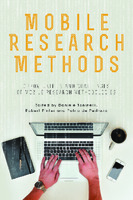
        Mobile Research Methods

        Opportunities and challenges of mobile research methodologies
        Thumbnail
        Download PDF Viewer
        Web Shop
        Author(s)
        Pedraza, de, Pablo
        Pinter, Robert
        Toninelli, Daniele
        Language
        English
        Show full item record
        Abstract
        Daily activity sees data constantly flowing through cameras, the internet, satellites, radio frequencies, sensors, private appliances, cars, smartphones, tablets and the like. Among all the tools currently used, mobile devices, especially mobile phones, smartphones and tablets, are the most widespread, with their use becoming prevalent in everyday life within both developed and developing countries. Shopping, reading newspapers, participating in forums, projecting and completing surveys, communicating with friends and making new ones, filing tax returns and getting involved in politics are all examples of how ingrained mobile technology is to modern lifestyleMobile devices allow a wide range of heterogeneous activities and, as a result, have great potential in terms of the different types of data that can be collected. The use of mobile devices to collect, analyse and apply research data is explored here. This book focuses on the use of mobile devices in various research contexts, aiming to provide a detailed and updated knowledge on what is a comparatively new field of study. This is done considering different aspects: main methodological possibilities and issues; comparison and integration with more traditional survey modes or ways of participating in research; quality of collected data; use in commercial market research; representativeness of studies based only on the mobile-population; analysis of the current spread of mobile devices in several countries, and so on. Thus, the book provides interesting research findings from a wide range of countries and contexts. This book was developed in the framework of WebDataNet’s Task Force 19. WebDataNet, was created in 2009 by a group of researchers focusing on the discussion on data collection methods. Supported by the European Union programme for the Coordination of Science and Technology, WebDataNet has become a unique, multidisciplinary network that has brought together leading web-based data collection experts from several institutions, disciplines, and relevant backgrounds from more than 35 different countries.
        URI
        http://library.oapen.org/handle/20.500.12657/33043
        Keywords
        survey methodology; mobile devices; unintended mobile response; web surveys; research methods; mobile web surveys; Computer-assisted telephone interviewing; Demography; Internet; Landline; Smartphone; SMS
        DOI
        10.5334/bar
        ISBN
        9781909188549;9781909188556;9781909188563
        OCN
        936351599
        Publisher
        Ubiquity Press
        Publisher website
        https://www.ubiquitypress.com/
        Publication date and place
        2015
        Classification
        Research methods: general
        E-book readers, tablets and other portable devices: consumer / user guides
        Mobile phones and smartphones: consumer / user guides
        Society and culture: general
        Industrial applications of scientific research and technological innovation
        Scientific equipment, experiments and techniques
        Impact of science and technology on society
        Digital and information technologies: social and ethical aspects
        Digital and information technologies: Legal aspects
        Internet: general works
        Internet guides and online services
        Pages
        166
        Public remark
        Relevant Wikipedia pages: Computer-assisted telephone interviewing - https://en.wikipedia.org/wiki/Computer-assisted_telephone_interviewing; Demography - https://en.wikipedia.org/wiki/Demography; Internet - https://en.wikipedia.org/wiki/Internet; Landline - https://en.wikipedia.org/wiki/Landline; Mobile device - https://en.wikipedia.org/wiki/Mobile_device; Mobile phone - https://en.wikipedia.org/wiki/Mobile_phone; Mobile web - https://en.wikipedia.org/wiki/Mobile_web; Smartphone - https://en.wikipedia.org/wiki/Smartphone; SMS - https://en.wikipedia.org/wiki/SMS
        Rights
        https://creativecommons.org/licenses/by/4.0/
        • Imported or submitted locally

        Browse

        All of OAPENSubjectsPublishersLanguagesCollections

        My Account

        LoginRegister

        Export

        Repository metadata
        Logo Oapen
        • For Librarians
        • For Publishers
        • For Researchers
        • Funders
        • Resources
        • OAPEN

        Newsletter

        • Subscribe to our newsletter
        • view our news archive

        Follow us on

        License

        • If not noted otherwise all contents are available under Attribution 4.0 International (CC BY 4.0)

        Credits

        • logo EU
        • This project received funding from the European Union's Horizon 2020 research and innovation programme under grant agreement No 683680, 810640, 871069 and 964352.

        OAPEN is based in the Netherlands, with its registered office in the National Library in The Hague.

        Director: Niels Stern

        Address:
        OAPEN Foundation
        Prins Willem-Alexanderhof 5
        2595 BE The Hague
        Postal address:
        OAPEN Foundation
        P.O. Box 90407
        2509 LK The Hague

        Websites:
        OAPEN Home: www.oapen.org
        OAPEN Library: library.oapen.org
        DOAB: www.doabooks.org


        Export search results

        The export option will allow you to export the current search results of the entered query to a file. Differen formats are available for download. To export the items, click on the button corresponding with the preferred download format.

        A logged-in user can export up to 15000 items. If you're not logged in, you can export no more than 500 items.

        To select a subset of the search results, click "Selective Export" button and make a selection of the items you want to export. The amount of items that can be exported at once is similarly restricted as the full export.

        After making a selection, click one of the export format buttons. The amount of items that will be exported is indicated in the bubble next to export format.