Logo Oapen
  • Join
    • Deposit
    • For Librarians
    • For Publishers
    • For Researchers
    • Funders
    • Resources
    • OAPEN
        View Item 
        •   OAPEN Home
        • View Item
        •   OAPEN Home
        • View Item
        JavaScript is disabled for your browser. Some features of this site may not work without it.

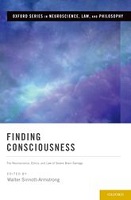
        Finding Consciousness

        The Neuroscience, Ethics, and Law of Severe Brain Damage
        Thumbnail
        Contributor(s)
        Sinnott-Armstrong, Walter (editor)
        Language
        English
        Show full item record
        Abstract
        Modern medicine enables us to keep many people alive after they have suffered severe brain damage and show no reliable outward signs of consciousness. Many such patients are misdiagnosed as being in a permanent vegetative state when they are actually in a minimally conscious state. This mistake has far-reaching implications for treatment and prognosis. To alleviate this problem, neuroscientists have recently developed new brain-scanning methods for detecting consciousness in some of these patients and even for asking them questions, including “Do you want to stay alive?” These new technological abilities raise many questions about what exactly these methods reveal (Is it really consciousness?), how reliable they are (Do they fail to detect consciousness in some patients who are conscious?), what these patients’ lives are like (Do they feel pain?), what we should do for and to these patients (Should we let them die?), who should decide (Are these patients competent to decide for themselves?), and which policies should governments and hospitals enact (Which kinds of treatment should be made available?). All of these questions and more are addressed in this collection of original papers. The prominent contributors provide background information, survey the issues and positions, and take controversial stands from a wide variety of perspectives, including neuroscience and neurology, law and policy, and philosophy and ethics. This collection should interest not only academics but anyone who might suffer brain damage, which includes us all.
        URI
        https://library.oapen.org/handle/20.500.12657/47840
        Keywords
        consciousness, vegetative state, minimally conscious state, death, disability, pain, brain damage, neuroscience, fMRI, ethics
        DOI
        10.1093/acprof:oso/9780190280307.001.0001
        ISBN
        9780190280307
        Publisher
        Oxford University Press
        Publisher website
        https://global.oup.com/
        Publication date and place
        Oxford, 2016
        Series
        Oxford Series in Neuroscience, Law & Philosophy,
        Classification
        Neurosciences
        Chapters in this book
        • Chapter 10 Moral Conflict in the Minimally Conscious State
        Rights
        • Imported or submitted locally

        Browse

        All of OAPENSubjectsPublishersLanguagesCollections

        My Account

        LoginRegister

        Export

        Repository metadata
        Logo Oapen
        • For Librarians
        • For Publishers
        • For Researchers
        • Funders
        • Resources
        • OAPEN

        Newsletter

        • Subscribe to our newsletter
        • view our news archive

        Follow us on

        License

        • If not noted otherwise all contents are available under Attribution 4.0 International (CC BY 4.0)

        Credits

        • logo EU
        • This project received funding from the European Union's Horizon 2020 research and innovation programme under grant agreement No 683680, 810640, 871069 and 964352.

        OAPEN is based in the Netherlands, with its registered office in the National Library in The Hague.

        Director: Niels Stern

        Address:
        OAPEN Foundation
        Prins Willem-Alexanderhof 5
        2595 BE The Hague
        Postal address:
        OAPEN Foundation
        P.O. Box 90407
        2509 LK The Hague

        Websites:
        OAPEN Home: www.oapen.org
        OAPEN Library: library.oapen.org
        DOAB: www.doabooks.org


        Export search results

        The export option will allow you to export the current search results of the entered query to a file. Differen formats are available for download. To export the items, click on the button corresponding with the preferred download format.

        A logged-in user can export up to 15000 items. If you're not logged in, you can export no more than 500 items.

        To select a subset of the search results, click "Selective Export" button and make a selection of the items you want to export. The amount of items that can be exported at once is similarly restricted as the full export.

        After making a selection, click one of the export format buttons. The amount of items that will be exported is indicated in the bubble next to export format.