Logo Oapen
  • Join
    • Deposit
    • For Librarians
    • For Publishers
    • For Researchers
    • Funders
    • Resources
    • OAPEN
        View Item 
        •   OAPEN Home
        • View Item
        •   OAPEN Home
        • View Item
        JavaScript is disabled for your browser. Some features of this site may not work without it.

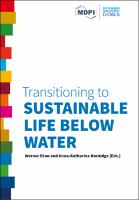
        Transitioning to Sustainable Life below Water
        Thumbnail
        Download PDF Viewer
        Web Shop
        Contributor(s)
        Ekau, Werner (editor)
        Hornidge, Anna-Katharina (editor)
        Language
        English
        Show full item record
        Abstract
        The ocean plays a central role in the life and development of human kind. Besides space for navigation and trade (roughly 10 billion tons of commodities are transported across the oceans each year), the provision of biological and non-living resources is the most important service of the marine ecosystems. Yet, these ecosystems are increasingly impeded by human activities and interventions. Human and naturally induced changes in climate are buffered by the ocean, but its capacity to compensate the increase of CO2 in the atmosphere is at its limit. The increase of global temperatures and the decrease of oxygen concentration and pH are severe stressors for aquatic species and thus for the whole ecosystem. Urbanisation and population growth at the coast, along with severe levels of pollution, are stressing coastal environments and hampering or interrupting life cycles of species as well as the well established and naturally balanced internal interconnections within and between ecosystems. Mining for oil and gas is interfering with fisheries, competing for space with other sectors and increasing the risks for large scale pollution. The result is a decline in ecosystem services and a negative feedback into the socio-economic systems. The recent reports by IPBES and IPCC underline the degrading conditions in which the ecosystems are situated today. The IPBES report evaluates a number of direct and indirect drivers. Population increase, technical development, malfunctioning of governance and spreading of conflicts affect direct drivers such as sea use change, direct exploitation, climate change, pollution, invasive species and others. read less Following a series of summits and conventions that prompted the United Nations in recent decades, Rio de Janeiro in 1992, Johannesburg in 2002 and Rio+20 in 2012, all of which were rather land-based, the Sustainable Development Goals 2015 set a new landmark in which the ocean, too, was finally acknowledged as significant to global development. The Ocean Conference in New York in June 2017 led the international community to formulate clear goals for the development of the ocean. The volume Transitioning to Sustainable Life below Water will address critical issues in ocean use and reflect against goals and targets of SDG 14 and other relevant SDGs. Transitioning to Sustainable Life below Water is part of MDPI's new Open Access book series Transitioning to Sustainability. With this series, MDPI pursues environmentally and socially relevant research which contributes to efforts toward a sustainable world. Transitioning to Sustainability aims to add to the conversation about regional and global sustainable development according to the 17 SDGs. Set to be published in 2020/2021, the book series is intended to reach beyond disciplinary, even academic boundaries.
        URI
        https://library.oapen.org/handle/20.500.12657/54276
        Keywords
        biodiversity; oceans; sustainability; life below water
        DOI
        10.3390/books978-3-03897-877-0
        ISBN
        9783038978763, 9783038978763, 9783038978770
        Publisher
        MDPI - Multidisciplinary Digital Publishing Institute
        Publication date and place
        Basel, 2022
        Pages
        160
        Rights
        https://creativecommons.org/licenses/by-nd/4.0/
        • Imported or submitted locally

        Browse

        All of OAPENSubjectsPublishersLanguagesCollections

        My Account

        LoginRegister

        Export

        Repository metadata
        Logo Oapen
        • For Librarians
        • For Publishers
        • For Researchers
        • Funders
        • Resources
        • OAPEN

        Newsletter

        • Subscribe to our newsletter
        • view our news archive

        Follow us on

        License

        • If not noted otherwise all contents are available under Attribution 4.0 International (CC BY 4.0)

        Credits

        • logo EU
        • This project received funding from the European Union's Horizon 2020 research and innovation programme under grant agreement No 683680, 810640, 871069 and 964352.

        OAPEN is based in the Netherlands, with its registered office in the National Library in The Hague.

        Director: Niels Stern

        Address:
        OAPEN Foundation
        Prins Willem-Alexanderhof 5
        2595 BE The Hague
        Postal address:
        OAPEN Foundation
        P.O. Box 90407
        2509 LK The Hague

        Websites:
        OAPEN Home: www.oapen.org
        OAPEN Library: library.oapen.org
        DOAB: www.doabooks.org


        Export search results

        The export option will allow you to export the current search results of the entered query to a file. Differen formats are available for download. To export the items, click on the button corresponding with the preferred download format.

        A logged-in user can export up to 15000 items. If you're not logged in, you can export no more than 500 items.

        To select a subset of the search results, click "Selective Export" button and make a selection of the items you want to export. The amount of items that can be exported at once is similarly restricted as the full export.

        After making a selection, click one of the export format buttons. The amount of items that will be exported is indicated in the bubble next to export format.