
Logo Oapen
  • Join
    • Deposit
    • For Librarians
    • For Publishers
    • For Researchers
    • Funders
    • Resources
    • OAPEN
        View Item 
        •   OAPEN Home
        • View Item
        •   OAPEN Home
        • View Item
        JavaScript is disabled for your browser. Some features of this site may not work without it.

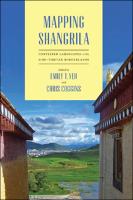
        Mapping Shangrila

        Contested Landscapes in the Sino-Tibetan Borderlands
        Thumbnail
        Download PDF Viewer
        Download
        Web Shop
        Contributor(s)
        Yeh, Emily T. (editor)
        Coggins, Christopher R. (editor)
        Language
        English
        Show full item record
        Abstract
        Open-access edition: DOI 10.6069/9780295805023 In 2001 the Chinese government announced that the precise location of Shangrila—a place that previously had existed only in fiction—had been identified in Zhongdian County, Yunnan. Since then, Sino-Tibetan borderlands in Yunnan, Sichuan, Gansu, Qinghai, and the Tibet Autonomous Region have been the sites of numerous state projects of tourism development and nature conservation, which have in turn attracted throngs of backpackers, environmentalists, and entrepreneurs who seek to experience, protect, and profit from the region’s landscapes. Mapping Shangrila advances a view of landscapes as media of governance, representation, and resistance, examining how they are reshaping cultural economies, political ecologies of resource use, subjectivities, and interethnic relations. Chapters illuminate topics such as the role of Han and Tibetan literary representations of border landscapes in the formation of ethnic identities; the remaking of Chinese national geographic imaginaries through tourism in the Yading Nature Reserve; the role of The Nature Conservancy and other transnational environmental organizations in struggles over culture and environmental governance; the way in which matsutake mushroom and caterpillar fungus commodity chains are reshaping montane landscapes; and contestations over the changing roles of mountain deities and their mediums as both interact with increasingly intensive nature conservation and state-sponsored capitalism.
        URI
        https://library.oapen.org/handle/20.500.12657/75805
        Keywords
        Social and cultural anthropology; Asian history
        DOI
        10.6069/9780295805023
        ISBN
        9780295805023, 9780295805023, 9780295805023, 9780295993577
        Publisher
        University of Washington Press
        Publication date and place
        Seattle, 2014
        Imprint
        University of Washington Press
        Series
        Studies on Ethnic Groups in China,
        Pages
        348
        Rights
        https://creativecommons.org/licenses/by-nc-nd/4.0
        • Imported or submitted locally

        Browse

        All of OAPENSubjectsPublishersLanguagesCollections

        My Account

        LoginRegister

        Export

        Repository metadata
        Logo Oapen
        • For Librarians
        • For Publishers
        • For Researchers
        • Funders
        • Resources
        • OAPEN

        Newsletter

        • Subscribe to our newsletter
        • view our news archive

        Follow us on

        License

        • If not noted otherwise all contents are available under Attribution 4.0 International (CC BY 4.0)

        Credits

        • logo EU
        • This project received funding from the European Union's Horizon 2020 research and innovation programme under grant agreement No 683680, 810640, 871069 and 964352.

        OAPEN is based in the Netherlands, with its registered office in the National Library in The Hague.

        Director: Niels Stern

        Address:
        OAPEN Foundation
        Prins Willem-Alexanderhof 5
        2595 BE The Hague
        Postal address:
        OAPEN Foundation
        P.O. Box 90407
        2509 LK The Hague

        Websites:
        OAPEN Home: www.oapen.org
        OAPEN Library: library.oapen.org
        DOAB: www.doabooks.org


        Export search results

        The export option will allow you to export the current search results of the entered query to a file. Differen formats are available for download. To export the items, click on the button corresponding with the preferred download format.

        A logged-in user can export up to 15000 items. If you're not logged in, you can export no more than 500 items.

        To select a subset of the search results, click "Selective Export" button and make a selection of the items you want to export. The amount of items that can be exported at once is similarly restricted as the full export.

        After making a selection, click one of the export format buttons. The amount of items that will be exported is indicated in the bubble next to export format.