
Logo Oapen
  • Join
    • Deposit
    • For Librarians
    • For Publishers
    • For Researchers
    • Funders
    • Resources
    • OAPEN
        View Item 
        •   OAPEN Home
        • View Item
        •   OAPEN Home
        • View Item
        JavaScript is disabled for your browser. Some features of this site may not work without it.

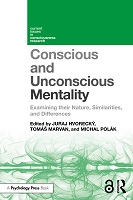
        Chapter 10 Troubles with the Orthogonality Thesis

        Proposal review
        Thumbnail
        Download PDF Viewer
        Author(s)
        Hvorecký, Juraj
        Language
        English
        Show full item record
        Abstract
        This chapter evaluates some basic assumptions behind the “dual” theories of phenomenal consciousness and finds them problematic for at least some examples of conscious episodes. Because the dual theories claim to be universalist in nature, even small number of counterexamples damages their status. I will present evidence, both empirical and conceptual, that demonstrates untenability of the dualist assumptions that conscious phenomenality and its unconscious counterpart possess essentially the same qualities. In doing so, I will primarily attack the claim that is shared by many dual theorists that the procedure responsible for bringing phenomenal content into consciousness serves this sole function and does not influence phenomenal qualities of content. I use the term orthogonality, first introduced in Vosgerau et al. (2008), as a convenient shortcut for the conception in which consciousness and content come unproblematically apart. I will conclude by hinting at an alternative proposal that explains emergence of conscious phenomenality as a single step operation.
        Book
        Conscious and Unconscious Mentality
        URI
        https://library.oapen.org/handle/20.500.12657/85152
        Keywords
        attention; higher-order theories of consciousness; inattentional blindness; masking; mental qualities; neurophenomenal structuralism; phenomenal content; unconscious mental states
        DOI
        10.4324/ 9781003409526- 13
        ISBN
        9781003409526, 9781032529790, 9781032529745
        Publisher
        Taylor & Francis
        Publisher website
        https://taylorandfrancis.com/
        Publication date and place
        2024
        Imprint
        Routledge
        Pages
        12
        Public remark
        This Chapter was funded by EU grant No. CZ.02.2.69/0.0/0.0/18_054/0014626
        Rights
        https://creativecommons.org/licenses/by-nc-nd/4.0/
        • Imported or submitted locally

        Browse

        All of OAPENSubjectsPublishersLanguagesCollections

        My Account

        LoginRegister

        Export

        Repository metadata
        Logo Oapen
        • For Librarians
        • For Publishers
        • For Researchers
        • Funders
        • Resources
        • OAPEN

        Newsletter

        • Subscribe to our newsletter
        • view our news archive

        Follow us on

        License

        • If not noted otherwise all contents are available under Attribution 4.0 International (CC BY 4.0)

        Credits

        • logo EU
        • This project received funding from the European Union's Horizon 2020 research and innovation programme under grant agreement No 683680, 810640, 871069 and 964352.

        OAPEN is based in the Netherlands, with its registered office in the National Library in The Hague.

        Director: Niels Stern

        Address:
        OAPEN Foundation
        Prins Willem-Alexanderhof 5
        2595 BE The Hague
        Postal address:
        OAPEN Foundation
        P.O. Box 90407
        2509 LK The Hague

        Websites:
        OAPEN Home: www.oapen.org
        OAPEN Library: library.oapen.org
        DOAB: www.doabooks.org


        Export search results

        The export option will allow you to export the current search results of the entered query to a file. Differen formats are available for download. To export the items, click on the button corresponding with the preferred download format.

        A logged-in user can export up to 15000 items. If you're not logged in, you can export no more than 500 items.

        To select a subset of the search results, click "Selective Export" button and make a selection of the items you want to export. The amount of items that can be exported at once is similarly restricted as the full export.

        After making a selection, click one of the export format buttons. The amount of items that will be exported is indicated in the bubble next to export format.